Friday, March 31, 2006

Uncharted Territory


Ultraslow ridges hold new clues to crust's formation

Carolyn Gramling

At the top of the world in the late summer of 2001, the U.S. Coast Guard's icebreaker Healy carved a slow path through the ice-covered Arctic Ocean. On board, marine geologist Henry Dick sent dredge after dredge through the ice to the seafloor, searching for telltale rocks that would help shed light on how Earth's crust forms. "People said, 'You'll never get a single rock off the seafloor,'" Dick says. "They said, 'You can't dredge in the ice.'" But in fact, Dick's team collected more than 200 rocks—many of which turned out to be pieces of Earth's mantle.

Under the ice and 2 kilometers of water was a 1,800-km-long underwater mountain range known as the Gakkel Ridge. The Healy's expedition, conducted in tandem with the German icebreaker Polarstern, was the first exploration to that Arctic ridge to attempt to collect geological samples.

The surprising discovery of mantle rocks indicated that Gakkel Ridge is one of only two places known on the planet where the tectonic plates that make up Earth's hard outer crust slide apart and expose large slabs of the mantle on the seafloor. That mantle is normally buried under 6 km of crustal rock.

The other site, the 8,800-km-long Southwest Indian Ridge (SWIR), is on the far side of the world. Like the Gakkel Ridge, the SWIR is utterly remote. It's located beneath treacherous high seas.

Oceanographers are only now beginning to explore these areas in detail. They have already made surprising geological finds, including the exposed mantle. They've also uncovered evidence at both ridges of hydrothermal vents, fissures in the seafloor through which circulating, magma-heated seawater escapes. Researchers say that these two ridges may represent a new class of tectonic boundary, called an ultraslow-spreading ridge. The finding offers scientists the chance to explore new ideas about how Earth's crust forms and to study the rich ecosystems spawned by the vents.

Read more about it at Science News online.

Resolution Pledges to Safeguard Ponds


Voters have an opportunity this spring to pledge support for water quality protection on the Island - and in particular for the recommendations of the Massachusetts Estuaries Project, a landmark study that will provide critical tools for managing the watersheds around the Vineyard's coastal ponds.

"To me the coastal ponds are probably the one most critical environmental feature on Martha's Vineyard and it drives the economy. I think that is why people come here," said Bruce Rosinoff, a coordinator for the estuaries project, from Edgartown.

The project is a six-year collaboration between the state Department of Environmental Protection and the School of Marine Science and Technology at the University of Massachusetts at Dartmouth. It is using hard science and state-of-the-art technology to analyze the health and nutrient carrying capacity of virtually all the estuaries in southeastern Massachusetts.

On the Island, Sengekontacket Pond, Edgartown Great Pond, Tisbury Great Pond, Lagoon Pond and Lake Tashmoo are all enrolled in the study. The first reports are due later this year, and among them will be one addressing the Edgartown Great Pond.

At the special town meeting Tuesday night, Tisbury voters unanimously approved a nonbinding resolution to give careful consideration to the results and recommendations of the estuaries project, and to work with other towns to preserve and restore the quality of the Island's ponds and waterways.

Read the rest here.

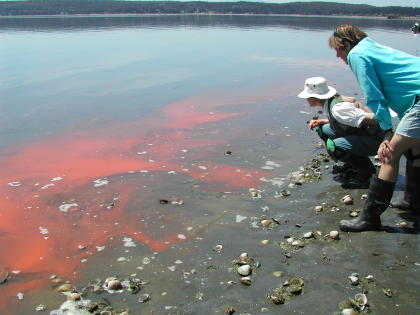
Red tide blooms get more frequent


Gulf summit ends with a discussion of harmful algae

By Brandi Dean Caller-Times
March 31, 2006


When red tide bloomed in Corpus Christi last year, no one knew what caused it, how long it would last or how to get rid of it.

Now an expert on the microscopic algae that kills fish, turns water red and wreaks havoc with respiratory systems has added one more item to the list of unknowns: whether it's coming back.


"We don't have any good way of predicting it from year to year," said Tracy Villareal, a research associate professor at the University of Texas Marine Science Institute.

Villareal, who spoke on harmful algal blooms as a panelist at the State of the Gulf of Mexico Summit on Thursday, said that while he believes science is moving in the direction of understanding red tide, it's slow going. The three-day event sponsored by the Texas A&M University-Corpus Christi's Harte Research Institute for Gulf of Mexico Studies, ended Thursday.

"This is a difficult funding area for oceanography at the moment," he said. "We're talking about a very expensive science. The ocean is very large and we're very small."

One thing he could say, however, is that red tide is increasing in the number of blooms. In the past 15 years, Villareal said more blooms have been reported than in the previous 50. Some of it may be attributable to better reporting, but probably not all of it.

"My suspicion is we're not going to see fewer of them," he said.

But that's not the only thing the Gulf Coast has to be aware of, in terms of harmful algae. There's also Ciguatera, which is the most likely of algal blooms to cause problems for people. Villareal said that between 50,000 and 500,000 people are affected by it every year - the span is large because most doctors wouldn't recognize its many and varied symptoms. There have been reports of the algae in Texas, Villareal said, and it also may be getting worse. The algae lives on reefs, so as humans build more artificial reefs - such as those created by oil rigs - it may spread.

Nancy Rabalais, professor at the Louisiana Universities Marine Consortium, added dead zones to the list of Gulf Coast menaces. Dead zones are areas of oceans with little oxygen. Rabalais said they are because of nutrients - particularly nitrogen - that travel down the Mississippi River and into the Gulf. They eventually become food for bacteria that uses up the oxygen, leaving little for fish and shrimp.

Rabalais said one way of decreasing the dead zone is to decrease the use of nitrogen in fertilizer, but she found one other effective method: hurricanes. The storms stir up the water and redistribute oxygen.

"But that's not really the solution I'm advocating," Rabalais said.

Oceans gradually turning into vast 'fizzy drink'

LONDON, UK (29 Mar 2006) -- The oceans are gradually turning into a vast "fizzy drink", a transformation that could be catastrophic for ocean life. Levels of carbonic acid - the reaction product of water and carbon dioxide that is found in soda water - are increasing at a rate one hundred times faster than the world has seen for millions of years.

The cause is the ever-increasing level of CO2 in the atmosphere. And as well as devastating marine ecosystems, the knock-on effects of increasing acidification include harm to major economic activities such as tourism and fishing.

These are the conclusions of the first review of the state-of-knowledge about the acidification of the oceans. The report was produced by an international group of scientists, commissioned by the Royal Society, the UK's national academy of science.

The oceans are naturally alkaline but, since the industrial revolution, the sea surfaces have been turning ever more acidic. The report says that if CO2 emissions continue at current rates then by 2100 the pH of the sea will fall by as much as 0.5 units from its current level of pH 8.2. The pH scale runs from 1 (acidic) to 14 (alkaline), with 7 being neutral. And in the case of the oceans, the change would be effectively irreversible.

"It will take many thousands of years for natural processes to return the oceans to their pre-industrial state," says John Raven, at the University of Dundee, UK.

Chalk dumping

Raven and his colleagues looked at possible ways of neutralising the growing acidity, such as dumping chalk - a highly alkaline substance - into the sea, but all their ideas carried major problems of their own. "The only way to minimise the long-term consequences is to decrease CO2 emissions," Raven says.

The sea life expected to be worst hit include organisms that produce calcium carbonate shells, as these are harder to form in acidic waters. That means that corals, crustaceans, molluscs and certain plankton species will be at risk.


"It would not kill penguins, orca and other big animals directly, but it would affect the food chain with potentially damaging effects on larger animals," Raven explains.

Coral reefs face a three-pronged attack, the report says. There is global warming and coastal pollution, and now acidification. Raven says we can expect to see degradation of coral reefs in the tropics.

Giant blooms

And it does not stop there. There is an important group of photosynthetic plankton called coccolithophores that grow calcium carbonate shells and form giant "blooms" in spring and summer before sinking to the bottom of the ocean.

But the increasing acidification will hinder their ability to grow, meaning they remove less carbon from the atmosphere. This in turn will result in more carbonic acid being formed at the seas' surface.

"Calcium carbonate helps organisms to sink and enhances the biological pump," says Andrew Watson, an environmental biologist at the University of East Anglia, UK. The sea has absorbed about half of the CO2 produced by humans in the last 200 years and currently takes up one tonne of the gas each year for every person on the planet. But if the water becomes too acidic, the pump will not work and the ability of the oceans to mop up CO2 will fall, he says.

"Most climate scientists think the Kyoto targets themselves are wholly inadequate," Watson adds. "We need a sharp decline in CO2 emissions, down to half of today's levels."

SOURCE - New Scientist

Thursday, March 30, 2006

Ireland's First Wave-Energy Generator Arrives in Galway


Galway, Ireland [RenewableEnergyAccess.com] An initiative to open a wave energy test site one and a half miles off the coast of Spiddal, County Galway, is under way with the arrival of the first wave energy generator, Wavebob, which has arrived at Galway Docks. Made possible by the Marine Institute and Sustainable Energy Ireland, the 37-hectare Galway Bay test site will be open for engineers to field-test other prototype ocean-energy generators as well, all in the interest of harnessing the power of the Atlantic Ocean.

"The most energetic waves in the world are located off the West coast of Ireland," said Peter Heffernan, Marine Institute, CEO. "The technology to harness the power of the ocean is only just emerging and Ireland has the chance to become a market leader in this sector."

Wavebob will test a quarter-scale prototype, which is hoped to provide the most accurate evidence to date for the cost and performance potential for the device. Wavebob has already gone through a rigorous path of theoretical modeling followed by small-scale prototype testing in wave tanks. Some of this testing has been performed at the Hydraulics and Maritime Research Center, University College Cork.

Both agencies have been working closely to develop a research and development strategy for ocean energy technology in Ireland. This strategy will define a phased approach toward product development complemented by an outline of the investment levels required to sustain the development of an ocean energy industry in Ireland. The Marine Institute and Sustainable Energy Ireland (SEI) have invested Euro 300,000 [USD$365,000] in university-based research and a further Euro 850,000 [>USD$1 million] in industry-based research of ocean energy technology.

It is expected that the implementation of the Ocean Energy Development Strategy will see a progressive increase in the range and scale of research and innovation investment. In 2004, Teresa Pontes of Portugal, an ocean energy expert who spoke at an EurOcean marine science event in Galway, said that up to 20 million homes in Europe could be powered by clean, renewable energy from the sea. She estimated that by harnessing energy from waves and ocean currents, Europe could produce around 200 terawatt (200 million megawatt) hours per year of electrical power.

The Marine Institute, which hosted the event during Ireland's EU presidency, is mandated to spearhead all aspects of marine R&D leading to the sustainable development of Ireland's 220 million acres of underwater territory and has also drafted a comprehensive marine research and development strategy for the next seven years.

Lake Victoria's Water Level Dropping


Though pastoral when British explorer John Hanning Speke became the first European to explore its shores, today, Lake Victoria in East Africa is one of the most populous regions in the world. The lake provides food, transport, and electricity to more than 30 million people, but its resources are limited. Despite its impressive size—it’s the third-largest lake in the world—Lake Victoria is shallow, resembling, in Speke’s words, “the temporary deposit of a vast flood overspreading a large flat surface.” Until the Owens Falls Dam began to regulate water levels from the lake’s only outlet in 1954, the amount of water in the lake jumped drastically from year to year depending on rainfall. Though water levels continued to vary after the dam was built, they remained more than 11.9 meters above a gauge in Jinja, Uganda. But in early 2006, the Jason-1 satellite revealed that Lake Victoria had reached lows not seen since well before the dam was built.
Read more here.

This is major. Humans haave already fucked up Lake Victoria by introducing a food and game fish, the Nile Perch, to the lake which has decimated the native fish populations, increased runoff and nutrients are also creating hazards for these cichlids which use visual cues to spawn, among many other problems facing the lake. This is a sad sad time for the African Rift Lakes...

GLENDA!!!!


Tropical Cyclone Glenda formed off the northwestern coast of Australia on March 27, 2006. The storm quickly built into a powerful and well-defined cyclone during the next day. Powerful winds have whipped up surf along the coastline of Western Australia’s Pilbara region and brought powerful winds and rain to the islands off the Kimberly coast. As of March 29, 2006, the storm had reached Category 5 status, the maximum rating possible for a cyclone.

This photo-like image was acquired by the Moderate Resolution Imaging Spectrometer (MODIS) on the Terra satellite on March 29, 2006, at 10:40 a.m. local time (02:40 UTC). It shows Cyclone Glenda as a well-developed storm, sitting 525 kilometers (330 miles) west of Broome. Clouds from the storm covered most of the northwest coastline of Western Australia. Sustained, peak winds in the storm system were roughly 220 kilometers per hour (140 miles per hour) at this time. The storm’s spiraling clouds appear as a nearly solid white disk, but in several places, it appears as though some clouds are “boiling” up above the rest.

Predictions as of 2:55 a.m. Australian Western Standard Time on March 30 were that the storm would cross the coast between Exmouth and Karatha on Thursday afternoon or night as a very dangerous storm. The Australian Bureau of Meteorology predicted that wind speeds near the storm center could reach 265 kilometers per hour (165 miles per hour) as the storm comes ashore. Many coastal communities were being evacuated by State Emergency Services ahead of the storm.

That is the second massive cyclone of the season to hit Australia... anyone still think global warming has nothing to do with it???

Massive sewage spill closes Oahu beaches


HONOLULU, Hawaii (29 Mar 2006) -- Warning signs to keep out of the water were posted Wednesday along part of Waikiki's world-famous beaches because of high bacteria levels from a massive sewage spill.

Ocean currents shifted toward Oahu's south shore beaches, carrying millions of gallons of raw sewage that was diverted into a canal from a broken pipe and into the ocean.

"What we feared has happened. The bacteria has kind of spread through areas of Waikiki," state Health Department spokesman Kurt Tsue said.

Environmentalists and residents fear long-term damage to the fragile coral reef and other marine life in the area.

"This is absolutely disgusting that here at the doorstep of our economic engine we have untreated sewage on the beaches. This should have never happened," said Jeff Mikulina, director of the Sierra Club, which filed a lawsuit in 2004 alleging deficiencies in the city's wastewater system.

The normally packed beaches remained open but were mostly empty. Rainy weather kept many tourists away, and those on the beach were greeted by signs that warned against swimming or fishing, saying, "Sewage contaminated water. Exposure to water may cause illness."

The city was monitoring the water in a several-mile stretch from Diamond Head to near downtown Honolulu. Bacteria levels near the beaches were not at threatening levels, but enough to put out a warning, Tsue said.

The city was trying to determine how much untreated sewage has been diverted into the canal, which empties into the ocean between two of Hawaii's most famous beach areas _ Waikiki and Ala Moana.

It could exceed 50 million gallons, considering an average 15 million gallons of wastewater a day flows out of Waikiki.

The city has been using pumps around the clock since the sewer line broke early Friday. Repairs on the 42-inch sewer main were completed Wednesday and the diversion into the canal was finally stopped.

The pipe, installed in 1964, cracked after heavy rain flooded the aging sewer system.

Tuesday, March 28, 2006

Feeling the Heat: The World Wakes Up


Two thousand and six is emerging as the year Americans finally wake up to the reality of global warming. Of course, E has been hammering away at the issue for six years or more, but now it has momentum, with the release of several new books and a Time magazine cover story ("Be Worried, Be Very Worried") April 3.

An ABC/Time/Stanford University poll accompanying the article confirmed that Americans are finally focusing on the problem. Today, 85 percent of Americans believe that global warming is occurring, versus 13 percent who don't. Sixty percent of respondents admit to worry about it either "a great deal" or "a good amount." Sixty-eight percent think the federal government should do more to combat it. (It's doing virtually nothing now.)

HERE ARE SOME OF THE EXMAPLES LISTED IN THE ARTICLE, WHICH YOU SHOULD READ HERE:

The California Coast: Migrating Species
New York: The Virus Specter
Florida: Dying Coral
Pacific Northwest: The Incredible Shrinking Glaciers
Antigua: Stronger Storms


ALL I CAN SAY IT'S ABOUT TIME THE AMERICAN PUBLIC START BECOMING MORE INFORMED AND WISE TO THE FACT THAT GLOBAL WARMING IS OCCURRING

Pacific isles get wildlife drive


A major initiative has been launched to conserve the fragile wildlife of the islands of the Pacific.

It includes a commitment to protect nearly a third of coastal waters and a fifth of the land area of Micronesia.

The announcement was made on the fringes of a UN conference on the protection of the world's biodiversity.

Scientists have warned that the variety of life on Earth is declining at a rate unprecedented since the demise of the dinosaurs.

In a separate move, one of the world's largest marine parks will be created in the Pacific island nation of Kiribati to protect an extraordinary untouched coral ecosystem.

Island extinctions

Islands contain a disproportionate number of the world's species, as their isolation over millions of years has resulted in separate evolutionary pathways.

For example, the exotic white-crested Kagu (Rhynochetos jubatus) is the sole member of an entire bird family, and lives only on the island of New Caledonia.

Arc-eye hawkfish
The islands are home to 500 species of fish
Some 16% of the world's known plant species have evolved on islands and their coastal waters contain half of the planet's variety of marine life.

This isolation makes the wildlife uniquely vulnerable to extinction as environmental changes in just a small area can easily wipe out entire species.

Half of all known extinctions have involved island species, including the notorious case of the dodo on Mauritius.

Current threats include deforestation, over-fishing and the degradation of coral reefs, 30% of which are already severely damaged.

Future of fishing

The initiative to increase protection of Pacific islands was launched by the president of the tiny nation of Palau, an island group with a human population of barely 20,000.

Turtles mating, Phoenix Islands Protected Area
The reserve will allow marine wildlife to develop in peace
Its aim is to provide effective protection by 2020 of 30% of the inshore marine life of the ocean region of Micronesia, and of 20% of land ecosystems.

At the launch of the programme in the Brazilian city of Curitiba, a total of $18m was pledged towards conservation in Micronesia, coming from a combination of government funds, conservation organisations and international finance institutions.

The new marine protected area in Kiribati will cover an area twice the size of Portugal, and will heavily restrict human activities in the Phoenix Islands, a group of eight coral atolls between Hawaii and Fiji.

They are nearly uninhabited, and have stunned conservation scientists with an extraordinary variety of unique wildlife including 120 species of coral and more than 500 fish, some new to science.

In addition, it is an important stopping point for migrating birds and sea turtles.

While the Phoenix Islands are still in a remarkably pristine condition, the creation of the new protected area is designed to prevent future damage from over-fishing and to offset the impact of climate change.

This will involve setting up an endowment fund to compensate the government of Kiribati for revenue it could have got from the issuing of commercial fishing licences, and also to finance professional management of the wildlife.

It is hoped that by protecting coral ecosystems, the long-term future for small-scale fishing can be secured for people in the region, as the reefs provide important spawning grounds.

'Major milestone'

The island initiative is being contrasted with the slow pace of global efforts to address the crisis of biodiversity loss, with the government negotiations at this UN convention getting bogged down in arguments over finance and the rules for sharing profits from products such as drugs obtained through traditional knowledge of plants.

There has been concern from conservation organisations that while a growing proportion of land-based ecosystems are at least officially protected, the process of designating ocean areas for conservation has barely begun.

Russ Mittermeier, of the group Conservation International, which is helping to sponsor the Phoenix Islands protection scheme, said: "This is a major milestone for marine conservation efforts in the Pacific and for island biodiversity."

"The Republic of Kiribati has shown unprecedented vision for long-term conservation of its precious marine biodiversity."

Fish protection areas questioned

Declaring small areas of the North Sea as 'no-fishing' zones would not save flagging fish stocks, suggests a new report.


Research from Newcastle University for the British Government's Department for Environment, Food and Rural Affairs (DEFRA) indicates that such proposals by environmentalists are misguided.

Marine protected areas (MPAs) would need to be tens of thousands of square miles in size – at least as big as the size of Wales – and be established for decades to restore levels of cod and haddock, says the report.

Moreover, creating large MPAs would be likely to intensify fishing in the waters left open for business, so further measures to reduce activity would have to be brought in.

However, the report's authors suggest that these 'drastic' measures are unlikely to be feasible and would require a significant policy shift for them to be implemented.

They also acknowledge that there is an 'information deficit' regarding the costs and benefits of MPAs, particularly in the case of the North Sea, and call for more research.

Environmentalists and public bodies such as the Royal Commission on Environmental Pollution are lobbying the British Government to introduce MPAs in parts of the North Sea to conserve marine life and restore fish stocks.

A team of marine ecologists from the University of Newcastle upon Tyne were asked by DEFRA to assess likely effects of MPAs in UK waters.

The report highlights that many MPA advocates are basing their opinions on scientific evidence garnered from small, conservation-oriented MPAs largely in tropical waters.

Although the Newcastle team acknowledges that MPAs have brought many benefits to the tropics and elsewhere, it stresses this experience can not be applied to the North Sea, which possesses very different habitats and species.

According to the report, small MPAs have conservation and localised fishery benefits in the UK, which is good news for shellfish and finfish (e.g. scallops and lobsters).

The MPAs will have to be very large to achieve recovery of North Sea cod stocks, though.

"Evidence suggests closing off small areas of the ocean won't deliver results with regard to highly mobile species like cod and haddock," said Professor Nicholas Polunin of Newcastle University's School of Marine Science and Technology.

"You need to create bigger protected areas and enforce them for several decades if you are to see a significant, lasting effect on stocks, which are massively depleted to historically low levels.

"However, this would raise the problem of intensive fishing activity in areas that are left open and further fishing restrictions would have to be brought in to address this."

This article brings up valid points. Much of the MPAs in place today are located in tropical waters, especially around reefs and the like. These fish are often not highly migratory, and therefore, MPAs work. But for larger, coldwater migratory species, small no take zones may or may not help. I am not suggesting they shouldn't try, because something needs to be done. Cod is afterall the fish that changed the world, and needs to be saved. Speaking of which, youu should read the book called "Cod: A Biography of the Fish That Changed the World" by Kurlansky, good read.

Shallow Water Seagrass Beds Are Vanishing


DURHAM, New Hampshire, March 28, 2006 (ENS) - Around the world, seagrass beds are in decline, says a scientist who has been studying the shallow water ecosystems for decades. As these underwater meadows disappear, so do commercially valuable shellfish and fish, waterfowl and other wildlife, water quality, and erosion prevention.

Frederick Short, research professor of natural resources and marine science at the University of New Hampshire, compares seagrass beds to forests on the ocean floor.

From the Hudson Bay, where the Cree Nation enlisted him to transplant their diminishing eelgrass beds, to the Pacific Island of Palau, Short has found the same thing.

"Almost everywhere we start monitoring seagrass, it’s declining," he says. While conclusive global results are not yet available, Short believes human impact is responsible for the decline.

Short, who founded the global monitoring program SeagrassNet in 2001, has been studying eelgrass, a type of seagrass found in the Northern Atlantic, for more than 20 years.

While he still conducts research at the University of New Hampshire’s Jackson Estuarine Laboratory on the Great Bay Estuary in Durham, he also collaborates with teams of researchers to monitor seagrass health at 45 sites in 17 countries worldwide.

Among the most productive plant communities on the planet, seagrass beds serve as protective nurseries for juvenile fish and shellfish, a habitat for many marine species, and a feeding ground for predatory fish, waterfowl and large sea creatures like manatees and sea turtles.

The root and rhizome system of these flowering plants stabilizes sediments, protecting the coastline from currents and weather-related erosion. Seagrass is an effective filter of nutrients and particulates, and it is the basis of a detrital food chain that feeds fish and shellfish.

At a state park in Malaysia, SeagrassNet has charted a decline since 2001 at both a "pristine" site and a less protected site.

Satellite imaging showed researchers that the impact was not due to a global force like climate change, but rather to on-shore logging that had increased the level of water-borne sediments at both sites, decreasing light reaching the bottom, where seagrasses grow.

Short and his SeagrassNet colleagues have not ruled out global climate change as a factor in the decline of seagrass beds. But the reasons for seagrass declines appear to be more localized. "Human pollution of the water has been the biggest issue," he says.

In remote areas of the Hudson and James Bays in sub-Arctic Canada, where members of the Cree Nation noticed their seagrass beds diminishing, Short observed that the beds were in the plume of fresh water released from a nearby Hydro-Quebec power plant. The fresh water influx decreased the salinity so much that the seagrass could no longer survive.

When seagrass beds disappear, Short says, the impact is major. A disease outbreak in the 1930s wiped out 90 percent of eelgrass in the North Atlantic. The scallop fishery in the mid-Atlantic disappeared, says Short, and "it’s never really come back."

In Thailand, where SeagrassNet researchers have begun investigating the impact of the December 2004 tsunami on seagrass, the beds provide local fishers with significant shellfish. "If the seagrass beds disappear, so do the people’s protein sources," says Short.

His work in Thailand highlights the reason for the worldwide monitoring program. Prior to SeagrassNet, little was known about seagrass in many locations around the world. With no baseline, assessing the impact of a disturbance like the tsunami is difficult.

Short is adding new sites to SeagrassNet around the world and, in New England, researching effective ways of restoring eelgrass to areas where water quality has improved.

A site selection model he has developed helps researchers determine areas that are optimal for restoring diminished eelgrass beds with sod-like patches.

As SeagrassNet researchers input their data into an online database, Short is now working on data analysis from the first five years of SeagrassNet monitoring.

At the same time, he will continue to add new sites to the global monitoring network. "It’s growing just as fast as I can grow it," he says.

For more information visit: http://www.seagrassnet.org

THIS IS of particular importance to me because I have been working with seagrasses for the last 3 years. I am also going back to school and will be working with eelgrass in Long Island. This is a very important species in so much as many, many commercially and recreationally important fin and shellfish species rely on seagrasses as a refuge or for food during some part of their life cycle. We need to protect these vital ecosystems...

Monday, March 27, 2006

Fisheries being plundered, researchers say


By Juliet Eilperin, The Washington Post | March 27, 2006

Highly mobile fishing fleets are exploiting the sea's resources at an unsustainable rate, according to a new paper published Friday by more than a dozen international researchers in the journal Science.

The paper, which looks at how ''roving bandits" swoop in and plunder fisheries at a rapid rate, examines how some fish populations have collapsed within a matter of years. In Maine, the sea urchin became a popular commodity in Japanese sushi markets in the mid-1980s: After peaking in 1993, the catches declined precipitously.

The paper, authored by 15 Canadian, Australian, US, Swedish, and Dutch ecologists, social scientists, and resource economists, concludes that even marine protected areas such as the Great Barrier Reef Marine Park, the largest marine protected area in the world, ''is too small to fully maintain stocks of marine mammals, turtles and sharks that migrate across its boundaries."

Dalhousie University professor Boris Worm, one of the co-authors, said ''existing marine protected areas are too small, too few and too far apart to prevent the tragedy of the oceans, which is arising due to the unbridled demand for seafood."

The study cited new export demands from the restaurant and aquarium trades, more sophisticated fishing technology, and rapid air transport of fish.

USF Oceanographer Sees "Oceans of Trouble"


Newswise — Over the past three years, two distinguished panels - the U.S. Commission on Ocean Policy and the Pew Oceans Commission - released major reports that found our oceans and coasts in serious trouble. Like the 9/11 Commission, the Ocean Commissions proposed detailed recommendations to avert a crisis in homeland security. The homeland crisis in our oceans, however, is getting worse, not better, says a Florida oceanographer.

“So far, those who could make a big difference have ignored most of the recommendations,” said Frank Muller-Karger, a professor at the University of South Florida College of Marine Science who served on the 16-member U.S. Commission on Ocean Policy. “Inaction continues to impact our health, economy and jobs. We continue to be short-sighted and manage our ocean resources by crisis rather than by conscience.”

According to Muller-Karger, the nation's marine territory is at risk, suffering from increasing pollution, over fishing and problems related to over-development.

“Federal waters are like federal lands - whatever is in them belongs to all of us, not to the government, or some company,” charges Muller-Karger. “Our goal should be to hold our government accountable for managing our resources properly, and doing it in a way that does not deplete them in the lifetime of our generation. To me, this means that we need an ecosystem-based management strategy.”

Muller-Karger advocates for the need to recognize that water, air and living and non-living resources do not follow - or live by - political boundaries.

”The oceans are an interconnected web of animals, plants, and people living across a complex geography,” he explains. “A change in one area sends a ripple that affects everything else in the system.”

Members of both commissions created the Joint Ocean Commission Initiative, which released an Ocean Policy Report Card evaluating efforts made by the administration and Congress.

“The results are discouraging,” he says. "The average grade was a barely passing D+.”

One serious problem, says Muller-Karger, is that we have upwards of 14 federal agencies charged with ocean issues. These agencies are, in turn, overseen by more than 60 congressional committees and subcommittees.

“There is too much duplication, too little coordination and too little funding," he charges.

Moving in the right direction doesn’t have to be very expensive. The U.S. Commission on Ocean Policy carefully estimated the costs of each of its recommendations. They concluded that an Ocean Policy Trust Fund of between two and four billion dollars per year should be established to better support management of our oceans and coasts.

“No one, as of yet, is talking about such a trust fund, which leads to an “F” on the report card for lack of funding,” asserts Muller-Karger. “This is a modest investment compared to the ultimate benefit of protecting our property, life, and coastal resources. It is an investment that will stimulate our coastal economies.”

Muller-Karger also suggests that all is not lost. Through public awareness and public activity, through events such as the upcoming “Oceans Day,” which Floridians will celebrate April 19, information about the importance of our ocean resources can be communicated to policy makers.

Historically, Oceans Day has been a day for impressing lawmakers with the importance of preserving the natural integrity of the oceans and taking positive steps to repair what has imperiled them, especially the harm done by neglect and abuse at the hands of humankind. Eagerly supported by students, staff and faculty at the University of South Florida’s College of Marine Science, the Florida Ocean Alliance’s (http://www.floridaoceanalliance.org) celebration of Oceans Day 2006 in Tallahassee promises to highlight the plight of our oceans as well as celebrate their beauty and emphasize their importance as an irreplaceable resource.

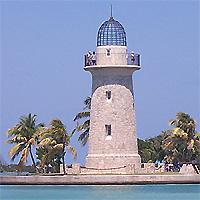
Boca Chita Key


So today, we needed to test our Mako engine to make sure it was running fine before our six week sampling period. So we launched out of Biscayne National Park range station and shot across the bay to Elliot Key, but we decided to check out Boca Chita Key instead. Its a small key that has natural inlets running along both north and south sides and the ocean on its east side (of course). Anyways, its a cool little place, where you can dock your boat and camp out overnight if you want. Like I already said, it is small, and you can see the whole thing in less than an hour. But if you have the time, you can go snorkeling around the island, there's lots of grass beds, its not too deep, and reef formations on the ocean side (although I haven't snorkeled out on the ocean side). We saw some pretty cool stuff today, including a big scrawled cowfish in inches of water, so content in its feeding it didn't seem to notice that its back was out of the water.

On the ocean side of the island there are lots of tidal pools (the island is like an old coral reef head that become exposed in lowering sea levels)which did not have too much life other than sergeant majors and sea urchins, although in one pool there was a baby tang, even though it didn't stick around long enough to get a good look at it. It was fun looking around there none-the-less and you should definitely check it out sometime.

Fujicco Discovers that Hot-water Extract of Kelp Helps Suppress Blood Sugar Rise


Tokyo, Mar 27, 2006 (JCN) - Fujicco, one of Japan's leading processed food manufacturers, announced on March 23 that it has discovered a unique property of a hot-water extract of kelp in collaboration with the Tokyo University of Marine Science and Technology.

Specifically, the two partners have found that the hot-water extract of kelp substantially suppresses the rise of blood glucose levels in glucose-tolerance tests using mice.

Further, they have elucidated that the extract inhibits the absorption of sugar from the intestines. Fujicco expects that these findings will lead to the development of novel health foods.

Details of this achievement will be presented at the Annual Meeting of the Japanese Society of Fisheries Science to be held in Kochi from March 29 to April 2.

Sunday, March 26, 2006

VIMS: Pfiesteria bloom never happened

BUT AS MENTIONED IN ANOTHER POSTING STRIPED BASS ARE IN TROUBLE AGAIN...

Anybody remember Pfiesteria hysteria? It was a raging crisis in the Chesapeake in 1997, when schools of menhaden pocked with sores went belly up in the Pocomoke River. The toxic dinoflagellate Pfiesteria piscicida was suspected of killing them, and of making people sick, too. Scientists and health officials swarmed in, concerned the affliction would spread. Nine years and millions of dollars later, here's what researchers at the Virginia Institute of Marine Science have to say about Pfiesteria:

Never happened. "My best scientific consideration is that Pfiesteria is not an issue in the Chesapeake and never was," says Wolfgang Vogelbein of VIMS. After extensive research, he suspects a fungus-like organism was to blame.

"The researchers were never able to isolate the [Pfiesteria] toxin," says Harley Speir of Maryland's Department of Natural Resources. "We do know those ugly sores were from a fungus, not Pfiesteria."


We bring up old news because a new affliction with a weird name looms in the nation's largest estuary. It's mycobacteriosis, a sickness caused by bacteria from the same germ family that produces tuberculosis and leprosy in humans. VIMS says up to 70 percent of rockfish (striped bass) in the bay are infected, and though there's no way to estimate subsequent mortality in the wild, myco is considered 100 percent fatal when it strikes rockfish in aquaculture ponds.

It's a slow "wasting disease" like TB that leaves stricken fish skinny and weak. It affects internal organs first. By the end, rockfish are emaciated and covered in red sores. A strain of myco also causes "fish handler's disease," a nasty hand infection resulting from exposure through cuts or nicks. In severe cases it gets deep into joints, forcing doctors to amputate digits or even limbs.

Mycobacteria is clearly no joking matter. Resource managers have been aware of its presence in bay rockfish for nearly a decade and believe it may be getting more prevalent. Some believe overall natural mortality for rockfish is increasing and myco may be a cause. Many think declining water quality and declining food sources in the bay stress fish to the point they are more susceptible to these naturally occurring bacteria.

On the other hand, coastal stocks of stripers are at a record high and some think the crisis is overblown. There are opinions of every stripe but little solid information. Worried officials reassure anglers and seafood-eaters that rock, the bay's premier sport and table fish, is safe to eat. But they also caution diners to stay away from raw rockfish and tell anglers to handle fish carefully, particularly if they show lesions, as a small percentage of rockfish do.

A front-page story on myco in The Post two weeks ago sent rockfish market prices plunging by half. It came at a rough time for the sportfishing industry. Charter skippers worry that apprehensive anglers now won't book spring trips. Rockfish season opens April 15 in Maryland and in the lower Potomac, May 1 in the District and May 15 in Virginia's portions of the bay.

It seems like a decade doesn't go by without a crisis on the bay. In the 1970s it was Kepone, a poison dumped into the James River that afflicted fish; in the '80s it was acid rain, thought to be ruining rockfish spawning success; in the '90s it was Pfiesteria. Now comes myco.

"When I saw that headline ["Chesapeake's Rockfish Overrun by Disease," Post, March 11], I thought 'Here we go again,' " said Mike Slattery, assistant secretary of Maryland's DNR.

But officials are far from unconcerned. Almost a decade after myco was first detected in rockfish, there are many more questions than answers. Vogelbein, who is seeking federal grants to ramp up research at VIMS, lists these unanswerables atop the list:

What is the extent of rockfish mortality? Does the disease go dormant? Can rockfish get over it? Does it affect spawning success? Can it spread to other species?

READ THE REEST OF THE ARTICLE HERE.

Squirrel Problem?? HAHA


HAHAHA Thank you Geekbase.org

Saturday, March 25, 2006

save something


Here, check out Care2... It's a cool site where all you need to do is click to savee land, animals... Plus you can sign up to get all sorts of environmental alerts and the likes as well as sign petitions if you so choose... DON'T LET CANADIANS KILL FUR SEALS!!!

boycott the exxon!


Dear friends,

I just sent an email to ExxonMobil to let them know that I will not buy ExxonMobil gasoline unless -- and until -- ExxonMobil takes meaningful action to curb global warming, to invest in renewable energy, and to pay for the damages done by the Exxon Valdez oil spill in Alaska.

It's time to hold ExxonMobil responsible for putting corporate profits over protection of wildlife and wildlife habitat. Please join me in boycotting ExxonMobil! http://go.care2.com/66837

Thank you!